
 MCV/DEVELOP News, events, research and jobs from the games industry

 Former MCV/DEVELOP editor Richie Shoemaker has taken shore leave from steering the good ship Debug++ to have a talk with Game Devs Of Color’s executive director Catt Small about fostering connection and community, and why the event is just as relevant now as the day it first began.
The political and cultural climate is such that even in an industry as seemingly inclusive as game development, advances that have been made in diversity over recent years – small that they may have been – are in serious danger of being rolled back. On the start of its landmark tenth expo, the organisers of Game Devs of Color aren’t simply content with holding ground but aim to push forward by continuing to challenge the status quo and support marginalised developers and creators. We caught up with executive director Catt Small to find out about how far Game Devs of Color has come, and more importantly, what’s on the horizon and what new or stubborn barriers to reaching it remain.
GDoC has grown significantly since its inception, both in size and reach. How has its mission evolved, and what new goals are you focusing on for this year’s landmark expo?
Our mission continues to be just as relevant as the day our event was first formed. We continue to invest energy in new programs that help us amplify the creative power held by people of color in games. This year, we’ve put more effort into collaboration with various partners so we can provide more support to our community in meaningful ways. Our partnerships have expanded from our annual GDC scholarship to include other events such as Games for Change, Play NYC, and gamescom.
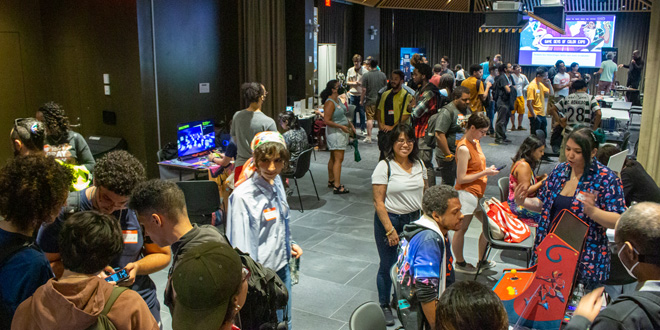
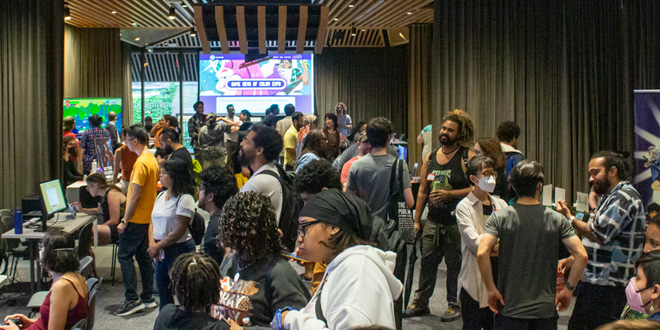
In terms of this year’s expo, we have focused heavily on connection. The energy at our event has always been unparalleled, and our community is consistently looking for more ways to build bonds. This year’s networking day will include new resume review sessions and a new community demo night. Additionally, we have open-sourced our watch party formula so that anyone can organize an official in-person gathering for GDoCExpo.
What are you personally most looking forward to at this year’s GDoCExpo?
Every year is so inspiring for me, and I really need to supercharge my creative energy right now. I’m especially excited to hear Andrea Saravia Pérez (Creation Within Turbulence), Christian Howard (Play as Spiritual Technology), Farfama Hargaaya (Atmosphere in Games), Jenny Windom (Pitch, Better Get Some Money!) and Nana Moon (Keylocker Development and Marketing Postmortem).
I’m also looking forward to seeing new game updates from our community in this year’s Direct — that’ll go live on our YouTube channel on September 16. And finally, I’m looking forward to meeting folks in-person at our NYC watch party on September 19!
For devs that are lacking in colour who might think GDoC isn’t for them, what would you say to get them to check it out?
This is a game developer’s conference, and it’s a source of inspiration with a unique twist. We’re at the bleeding edge of the industry, and that’s exciting to be a part of. Come listen to new perspectives. Open your world.
What are the most significant systemic barriers facing marginalised indie devs today, and how does GDoC Expo actively help participants overcome them?
The largest issue is definitely lack of access to funding. This has worsened as major publishers tighten their budgets and ask for more polished, refined pitches with semi-complete games. Smaller studios need more access to early-stage funding. Earlier this year, we raised and distributed over $6,000 of microgrants to developers experiencing hardship in our community. We also provide game development grants to members of our community in partnership with various organizations on an annual basis. The size of these grants vary but usually range from $5,000–$25,000. This year’s grant winners will be announced at our award ceremony on September 19.
Lack of access to business education is another issue our community faces. Indie studio leads need more guidance regarding how to transition from a scrappy team to a functional business. The expo always includes talks that cover this topic, but we want to do more. We are in the process of scoping out additional ways we can support our community year-round in this regard, but this is directly tied to how much financial support we receive. Donations help us pilot new ideas, so please chip in if you can!
How do you collaborate with publishers, platforms, and sponsors to create opportunities for devs at the expo?
Organizations that work with us are usually either looking to invest in the next best game or hire incredible talent. This is exactly the kind of support our community is looking for. It’s a win-win for everyone! We aim to cultivate as much connection as possible.
The first day of the expo is a networking day that features AMAs from major publishers and companies; this year’s AMA hosts include Firaxis Games, Schell Games, and Clever Endeavor. Throughout the rest of the event, attendees can connect with each other as well as with our sponsors through either direct messages or scheduled meetings. Additionally, attendees can opt into being contacted by potential publishers and hiring managers after the event if they are interested in potential collaboration.
Are there success stories of past participants landing deals or partnerships through GDoC?
We have lots of success stories. Our event is merely a platform for the hard work of our community, but we are especially proud of the stories from past grant winners, including Ethan Redd who received $15,000 to develop a Humble Original game and built various games through his studio, Virtuoso Neomedia Productions. Then there’s Chantal Ryan who went on to be featured on PC Gaming’s 25 Most Wanted Games list along with winning the PAX Australia Indie Showcase. Not forgetting Hessvacio Hassan, who put the funding towards expanding Museum Multiverse from a personal dream to a playable game. The game was then noticed by multiple VR headset manufacturers and has since been released on multiple VR platforms.
Many other incredible people have shown their games at our expo and gone on to do amazing things as well. For example, Xalavier Nelson Jr. is in the process of adapting El Paso, Elsewhere into a film with LaKeith Stanfield. The Venba and 1000xResist teams both won IGF awards after showing their games at our event. Jarryd Huntley, who used to be on our organizing team, recently won a Peabody for his work on We Are OFK. We are proud of every single person who comes through our figurative doors at some point on their path to success.
Beyond the event itself, how does GDoC foster ongoing mentorship and community support throughout the year?
Our team facilitates a variety of auxiliary programs throughout the year. The largest program is our series of scholarships. We send a cohort of professionals to various conferences such as GDC, Games for Change, and gamescom. Recipients get all-access passes to events that normally cost hundreds or thousands of dollars. With the help of additional sponsorship, we also support travel arrangements and facilitate on-site activities.
While diversity initiatives have grown, some argue they’re still tokenising. How can the industry move beyond performative inclusion and what role does GDoC play in that shift?
We need to see more support for studios run by creatives of color, and we need to retain more senior talent. Efforts will always feel performative until we have more leaders of color and change is reflected at the top of the career ladder.
We support this with our programming in various ways. We provide conference programming that builds senior leadership skills, funds so indie studios can stay afloat and, ideally, get to the next level, direct connections to publishers and platforms, and scholarships to access other major industry events
Our team is most interested in long-term, sustainable impact. Rather than focusing on entry-level support, we are thinking about how to ensure devs don’t fall off a cliff as they try to establish healthy businesses. We’ve even offered free coaching in partnership with a sponsor in the past so our community could have hands-on career guidance as they learn to lead. These initiatives make real change and ensure that less indies of color leave the industry.
With increasing polarisation around the world, but especially in the US, do you anticipate this year’s event taking on a more activist or downbeat tone?
GDoCExpo is more solarpunk than cyberpunk. The organizing team always acknowledges the current state of the world in our commencement. So do our speakers in their talks. But we don’t believe in doomscrolling. We believe that the only way forward is through real conversations about how we can make tangible change. We will continue to have hope, and we will continue to model the kind of change we want to see in the world.
More broadly, how do you balance celebrating creativity and diversity while addressing the challenges facing developers of colour?
The format of our event is designed to create this balance for us. We receive lots of talk submissions that show us the zeitgeist, and that of course informs our speaker curation process. What matters most to us is that we give our community members a chance to say something they probably couldn’t share elsewhere because the vibes might be off. Our expo is really special, and the conversations we are able to have in this space are so rare. To us, that in itself is enough of a balance.
When is GDoC coming to Europe? You’d be very welcome!
We are an international and virtual-first event and we’ve had lots of devs from around the world in our show, including folks who live in Europe! This year, we also began a partnership with devcom and several members of our community attended gamescom. That said, we certainly want to continue reaching more folks outside the USA. There are so many members of our community in Europe, and we’d love to support them. There is an action anyone can take today to make that happen. Since our watch party formula is open source, anyone in Europe who wants to organize an in-person watch party can do so. We encourage members of the community to make GDoC Europe happen!

![golden joysticks clair obscur 660x330 1 [Industry news] Winners Announced at the 43rd Golden Joystick Awards](https://mcvuk.com/wp-content/uploads/golden-joysticks-clair-obscur-660x330-1-310x165.png)
![xds img header 1 [Industry news] XDS marks move to the Vancouver Convention Centre with 50% off tickets for first 100 developers](https://mcvuk.com/wp-content/uploads/xds-img-header-1-310x165.jpg)
![asd 2 [Guest post] Beyond the Disc: Why the Format Debate is Really About Consumer Choice](https://mcvuk.com/wp-content/uploads/asd-2-310x165.jpg)