
 MCV/DEVELOP News, events, research and jobs from the games industry

Thomas Dunn, founder and director of RubberBandGames, tells Vince Pavey all about the work his team puts into letting his games’ players live their best Wobbly Life.
How do you describe Wobbly Life to people who aren’t familiar with it?
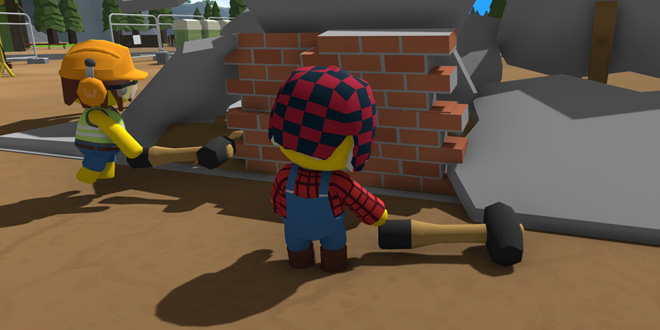
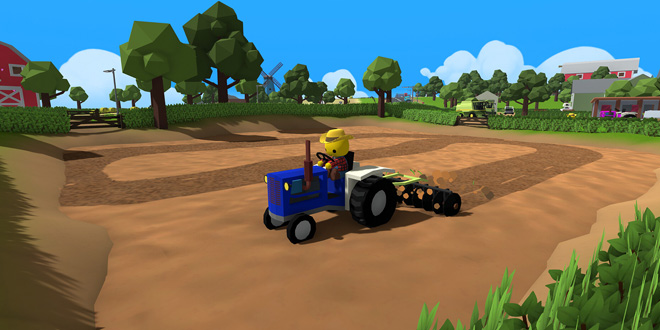
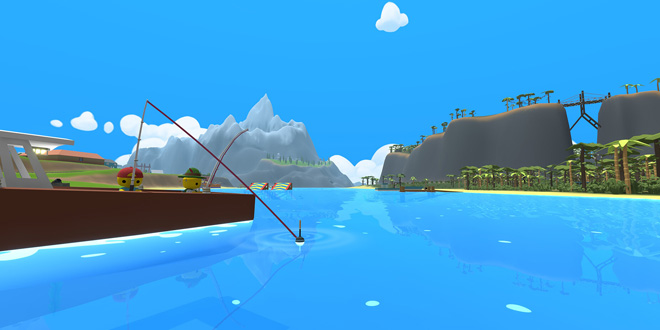
Wobbly Life is a vibrant open-world physics sandbox. You play with your friends online or in local co-op, with exciting jobs, mini games and wacky story missions. You earn cash to spend in the world on clothes, vehicles and houses. There is a whole Wobbly World out there to explore! Influencers and press alike have compared the game to Human Fall Flat, due to the physics-based movements and Grand Theft Auto for the open world gameplay where players compete missions to earn cash to live a Wobbly Life.
It’s sold over 1 million copies. What do you think has made it such a huge success with people?
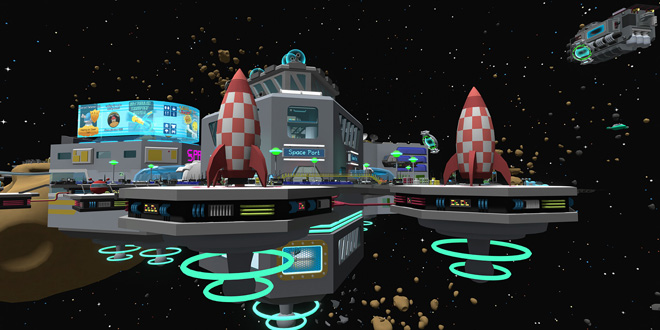
The “Space” update is the latest in over 20+ new content drops we have published since the launch of the game. Over the years we have made a point of listening to our community and this has driven our content roadmap. In addition to our community, we have built lasting relationships with many leading YouTube influencers who continually cover the game. The combination of all the initial updates, being available on all console platforms, and the massive Space update has now pushed total sales across all formats to over 2.1M units.
Your in-house team is only four employees, including yourself. How do you manage the workload and actually get a game out with a team of that size?
We all have our specialties, for example, Alex is our sound designer, Will is our character and 2D artist, Mark does the 3D models and I do all the programming. Building this open world experience with such a small team is a massive challenge, so we’ve built internal systems which help our workflow.
Does RubberBandGames listen to player feedback a lot? How do you prioritize which jobs, vehicles, or mini-games you’re going to add?
From the very beginning, our team has made listening to our community a priority, particularly our Discord community. With their feedback, we outline a private content roadmap schedule across the different aspects and play modes of the game. It’s a combination of our skill and imagination, combined with player feedback.
When you add new elements, do you design things in a way where they are modular and can be reused?
That completely depends on what we are trying to achieve. For example, the “Space” update has so many new systems and gameplay elements, which had to be built from scratch.
As Wobbly Life has grown, how have you scaled up your development pipeline to keep pace with the player demand for updates?
No, we never scaled up. Maybe we should have! We have an amazing team and we have just grinded over the years to do our best to add content as we progressed, in order to create something special.
You can play the entire game in multiplayer. What are the biggest challenges of that, and how has it affected your design choices?
You have to allow room for the players to create their own gameplay and fun, and then give them the tools (that’s vehicles, jobs, missions, etc.) to give the gameplay some structure. It’s a challenge to provide the players significant freedom along with some parameters to maintain some form of game loop.
What development tools (or middleware) have been essential to the development of Wobbly Life?
Unity, NVIDIA PhysX, FMOD and Rewired are essential to Wobbly Life. Everything else is custom made.
What advice would you give to indie developers that might want to follow in your independent developer-publisher footsteps?
It’s such a competitive and challenging market, so I can’t say what worked for us will work for other developers, but I will say … we spent meaningful time upfront coming up with the high concept and constantly reiterated along the way — based on player feedback and our own instincts — to find out what worked.
Once we had some success, we continued to add new content to keep the community engaged. If I was to give one word of advice, I would say listen to your player base and build what you love. If you are not enjoying what you are building, your players won’t either.


![golden joysticks clair obscur 660x330 1 [Industry news] Winners Announced at the 43rd Golden Joystick Awards](https://mcvuk.com/wp-content/uploads/golden-joysticks-clair-obscur-660x330-1-310x165.png)
![xds img header 1 [Industry news] XDS marks move to the Vancouver Convention Centre with 50% off tickets for first 100 developers](https://mcvuk.com/wp-content/uploads/xds-img-header-1-310x165.jpg)
![dfgdgdg [Industry news] Fireshine Games Expands Its Successful Portfolio with the Acquisition of Danish Developer Fair Games and Their Multimillion-Selling Game Necesse](https://mcvuk.com/wp-content/uploads/dfgdgdg-310x165.png)